
Dr David Resnik – Can Science Ever Be Value-Free? The “Norms in Practice” Approach to Managing Societal Value in Scientific Research
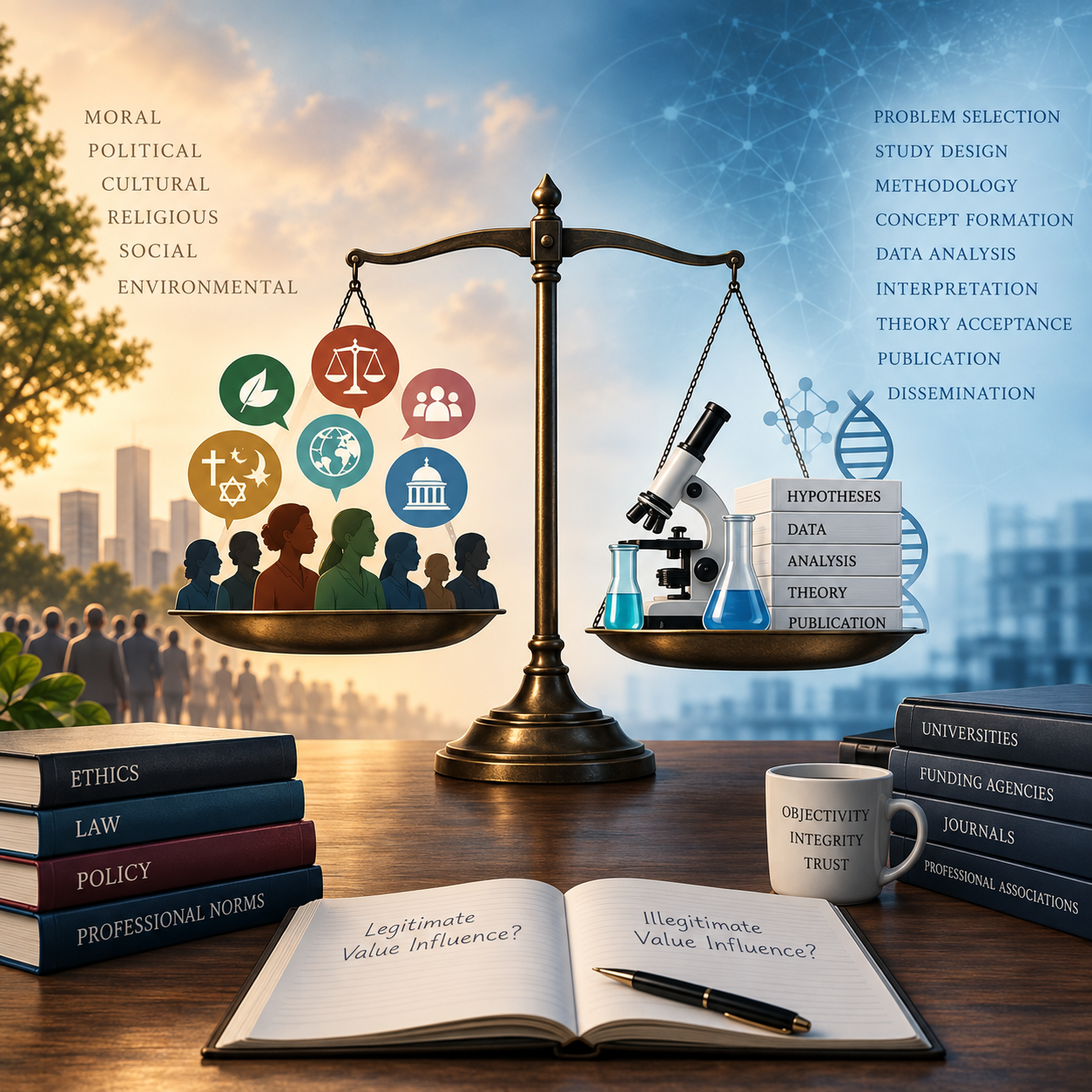
For much of the history of science, it was assumed that scientific research ought to be free from the influence of societal values (such as moral, political, cultural, or religious values). Many philosophers of science have challenged this “value-free” ideal for science by arguing that societal values often have a legitimate role to play in many different steps of the scientific process, including problem selection, study design, methodology, concept formation, data analysis and interpretation, hypothesis and theory acceptance, and publication and dissemination of scientific findings. However, most philosophers who have challenged the value-free ideal also recognize that it is important to not completely abandon it, since illegitimate (or unwarranted) value influences could undermine the objectivity, integrity, and trustworthiness of science. But what makes a value influence on science illegitimate? This is not an easy question to answer. In this talk, I will examine the value-free ideal for science, some important criticisms of it, and some strategies that philosophers have proposed for distinguishing between legitimate and illegimate value influences in science. I will also offer a solution to the problem of managing values in science, which Kevin Elliott and I have developed, which we call the “norms in practice” approach. We argue that appropriate management of values in science cannot be reduced to a simple definition or formula but depends on the presence of clearly defined and publicly defensible legal, ethical, and professional norms, rules and procedures for dealing with value conflicts, which can be implemented by universities, funding agencies, journals, and professional associations. I also show how our approach can be applied to some case involving management of societal values in science, including research with human participants, the use of scientific experts in public decision-making, and government funding of science.
DAVID B. RESNIK is a Bioethicist at the National Institute of Environmental Health Sciences and Senior Advisor for Research Integrity at the Office of Intramural Research at the National Institutes of Health. Dr. Resnik has over 400 peer-reviewed publications, including 10 books, on various topics pertaining to the ethical, philosophical, and legal aspects of science, technology, and medicine. Dr. Resnik is a Fellow of the American Association for the Advancement of Science and is an Associate Editor of the journal Accountability in Research. Dr. Resnik has mentored more than 60 students, including graduate, undergraduate, postdoctoral students, and early-career researchers. Dr. Resnik has a BA in philosophy from Davidson College, a PhD in philosophy from UNC-Chapel Hill, and a JD in law from Concord University/Purdue University Global.